


Ebook Pump Up Your Rating
Be focus on just what you really want to obtain. Book that currently becomes your focus ought to be located faster. Nevertheless, what kind of publication that you actually intend to read. Have you located it? If perplex constantly disturbs you, we will certainly provide you a brand-new advised book to review. Pump Up Your Rating is most likely you will require a lot. Love this publication, like the lesson, as well as love the perception.
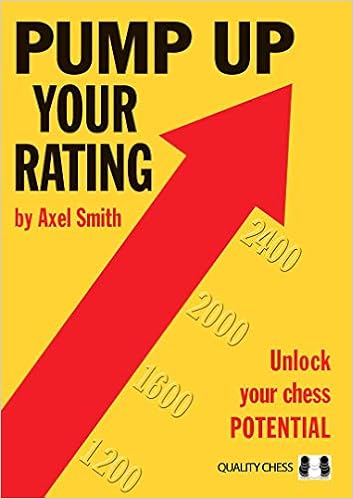
Pump Up Your Rating

Ebook Pump Up Your Rating
Do you need new reference to accompany your extra time when being at house? Reading a publication can be a great option. It can spare your time usefully. Besides, by reading publication, you could improve your understanding as well as experience. It is not only the scientific research or social expertise; several points can be acquired after reading a publication.
This publication comes with the unique preference of the book written. The specialist writer of this Pump Up Your Rating has generally makes a terrific book. Yet, that's not only around excellent publication. This is likewise the problem where the book gives really fascinating products to get over. When you actually wish to see how this publication is offered and also provided, you could join more with us. We will certainly offer you the web link of this publication soft data.
When you can entail the here and now books as Pump Up Your Rating in your gadget file, you could take it as one of one of the most worldly to read and enjoy in the spare time. Furthermore, the simplicity of way to check out in the device will certainly sustain your problem. It does not close the chance that you will certainly not get it in bigger reading product. It means that you only have it in your gizmo, doesn't it? Are you kidding? Locating the book, than make offer, as well as save guide will certainly not only make better system of reading.
To deal with this condition, many other people also try to get this book as their reading now. Are you interested? Pick this best book to offer today, we offer this book for you because it’s a kind of amazing book from professional and experienced author. Becoming the good friend in your lonely without giving boredom is the characteristic of Pump Up Your Rating that we present in this website.
About the Author
International Master Axel Smith from Sweden has had great success as a coach. Using his methods on himself, in the space of two years he boosted his rating from 2093 to 2458. He is now closing in on the Grandmaster title.
Read more
Product details
Paperback: 376 pages
Publisher: Quality Chess; First edition (December 17, 2013)
Language: English
ISBN-10: 1907982736
ISBN-13: 978-1907982736
Product Dimensions:
6.8 x 1 x 9.5 inches
Shipping Weight: 1.4 pounds (View shipping rates and policies)
Average Customer Review:
4.4 out of 5 stars
16 customer reviews
Amazon Best Sellers Rank:
#722,427 in Books (See Top 100 in Books)
This is the best chess book I have ever read. Every game us so interesting and unique. The explanations of what is going on in the positions are always clear. The training positions were a very good idea and were useful. I have played several of them with a partner and felt it was very instructive each time. The puzzles are also very challenging and the solutions are amazing. They are always based on simple tactical principles but there are also nuances that are absent in many problems you will find in online tactics trainers. You have to calculate everything and be vigilant. The best section of the book is the calculation section. It is inspiring to see the incredible attention to detail of top players. There are also tips regarding things like time management and attitude which I have not see in any other book.
Axel Smith clearly sets forth his training program for chess improvement including the Woodpecker Method for improving tactics and combinations vision and play, as well as his ideas for games analysis and mistake corrections. I thought his best analysis covered the calculation of variations. I recently noted that Quality Chess has published Axel Smith's new book on the Woodpecker Method.
The books is clearly intended for a 2000+ player. Axel Smith increased its rating in 2 years from 2000 to over 2400 which is remarkable.Some of the ideas are very interesting. The idea to think about pawn levers are very good and helpful. The part about chess psychology and has some useful tips that I applied in tournament games already.For the 1500+ player the book is quite ambitious to read, but I am very happy that I bought it.
Amazing insights on chess. You can never go wrong with this book.
I had to put this book away for awhile. As a class "B" player it is a bit over my head. I suggest club players with a limited budget try more user friendly material.
I've had this book for some time now and must confess to jumping around to read various sections / topics rather than reading it straight through. I have found the book to be well written and the advice very practical and beneficial. For players wanting to improve, I rate this book in the top 25% - not the very best but in the top quartile. There are other books that go deeper on strategy or endgame for example, but this one is a good all around introduction to how to plan a study program to improve your chess.
International Master Axel Smith has an abundant passion for chess improvement and a wonderful gift for writing. I was deeply impressed by this cornucopia of training methods and insights that boosted him and his chess buddies in Lund, Sweden, to international titles.Smith presents his material in 2 sections: 4 chapters on positional chess, then 5 chapters on training methods. The greatest strength of this book, however, is that he never really divorces the two; he sprinkles plenty of anecdotes about the training methods that helped him learn the positional principles into the first 4 chapters, and he provides a wealth of good chess analysis in the training section. And you will not just be learning from Smith: the author quotes from, and analyzes the games of, model players (generally, Swedish GMs) who helped him acquire his insights.In the first positional chapter, "No Pawn Lever - No Plan," Smith opened my eyes to the importance of looking for pawn moves ("levers") that can change the character of a position. As I have been playing stronger opponents on chess.com, I have come to realize that they pay a lot more attention to such pawn moves than I, and Smith has helped me see why. Of particular interest is his analysis of 4 different methods of fighting against the minority attack. In addition to analyzing several games in great depth, the author provides 11 interesting quiz positions with very deep analysis (about 2 pages per position)."Fair Exchange is No Robbery" discusses several considerations that signal the usefulness of seeking piece exchanges. He suggests, for example, that reducing the clutter can help you attack an opponent's positional weakness because it reduces his possibility for counterplay, and makes that weakness relatively more important. He also explores various kinds of material imbalances, such as rook + pawns vs. 2 minor pieces, but again he does not just talk about chess; he closes the chapter with several training positions for you and a fellow learner to explore.The "Auxiliary Questions" chapter puts forth several questions that may help you select candidate moves if you are puzzled about how to proceed. Smith is careful not to present the 6 questions as some sort of thinking method that you must follow in all situations; they are just there to help you find your way through the occasional perplexing moment.The "Calculation" chapter is less about positional chess than about the thinking/calculation methods that an IM (Smith) and a GM (Tikkanen) used for a very complex position. It reads a lot like de Groot's seminal work on chess thinking (Thought and Choice in Chess (Amsterdam Academic Archive)), but unlike de Groot's rather academic approach, it concludes with a variety of insights for improving the accuracy and productivity of your chess thinking. My favorite is the importance of the "falsifying" step; apparently, titled players spend a lot of time trying to prove that their selected move in a rich/critical position is really the best. I had never known! As a club player, I have pretty much gone through the move selection process, made a blunder check, then pushed the wood. I guess that's why I'm still a club player. But I'm starting to apply this falsification step in my correspondence games, so I am hopeful.The training program begins with his key method, the "List of Mistakes." Smith goes beyond the standard "analyze your games" advice by providing detailed instructions on how you can do root cause analysis to derive a small list of things you should work on. Smith recommends analysis methods, the number of games that should go into your list, and how you can weave the insights into your chess skill set.Smith continues with the "Woodpecker Method," which is basically Michael de la Maza's approach for learning tactics: find a set of puzzles and keep working them until the patterns are firmly in your brain. Unlike de la Maza, however, the author notes the importance of working through the full analysis of variations when you repeat a problem, rather than just recognizing the first move by memory and moving on. Smith also provides a first installment of 51 fairly complex positions for you to work through, although if you are on the lower end of the club spectrum you would probably want to invest in a book with simpler problems, or a server membership.The emphasis on the hard work of learning is nowhere more apparent than in his chapter on openings. Smith advocates that you use Chessbase (or similar software) to build your own "books," rather than leaning primarily on the standard books and opening DVDs. Smith gives detailed advice about what kind of analysis is useful, and where and how to use computer assistance. I had never even realized that analysis engines have a "null move" feature, for example, but Smith shows how to use this and many other techniques to prepare your openings. Smith provides these tips in the context of an opening "book" that he and a friend, GM Nils Grandelius, prepared.In the "Theoretical Endgames" chapter Smith lists 100 key endgame positions that you should master. Ever the innovator, Smith recommends that you and a friend select 10 of the positions, then set a date a month from now to play a clocked mini-tournament using them as the starting position. You will be motivated to learn them well if you are going to compete! And the process of playing the position out will firm up your knowledge. The publisher provides a PGN file with the 100 positions on their website.In the closing chapter, "Attitude," Smith provides some great advice about avoiding time trouble, agreeing to a draw (never, if you want to improve!), and bamboozling your opponent in a drawish ending.The one thing Smith overlooked is the importance of studying grandmaster games. Leading grandmasters like Tal, Fischer, Kasparov, and Carlsen studied thousands of their predecessors' games while they were pumping up their ratings, and I don't think they wasted their time. I speak from experience, as well: my study of a few hundred GM games has definitely helped me. So how did Smith get almost all the way to grandmaster without such study? Maybe he studied GM games in his youth and forgot to mention it, or perhaps he has compensated by reviewing chess games with Swedish IMs and GMs over the past several years. In any case, unless you can hang out with GM friends, you should include some GM game collections in your training plan. Dan Heisman has published some tips for studying GM games on chesscafe.com.Amitzia Avni, who otherwise praises the book on ChessCafe, gently chides Smith for giving up virtually all leisure activities other than chess for 5 years, but I don't see this as a problem for the reader. I know I won't be able to pick up 400 ELO rating points in 2 years (like Smith) without investing his eye-opening amount of work, but I can still get stronger by applying some of his really useful training tips in my own chess improvement plan. I highly recommend Smith's book for intermediate club players all the way up to master.=================================The publisher provided a review copy of the book in return for my honest review.
Normally, at least in my experience, when you buy a chess book you have to suffer through some long variations and somewhat boring writing. This is not the case with Pump Up Your Rating. Its advice is immediately applicable to your games and its chapter on training is worth the cost of the book alone.If and when Axel Smith writes more books, if they are like this, I believe he will be the next Andrew Soltis or John Nunn.
Pump Up Your Rating PDF
Pump Up Your Rating EPub
Pump Up Your Rating Doc
Pump Up Your Rating iBooks
Pump Up Your Rating rtf
Pump Up Your Rating Mobipocket
Pump Up Your Rating Kindle

Tidak ada komentar:
Posting Komentar