


Ebook Free Homecoming: Reclaiming and Championing Your Inner Child, by John Bradshaw
Based on the just how this publication will worry about, it is really specified that this publication is good and also appropriate for you. When you have no enough time to end up reading this book immediately, you could begin to read it from currently. Yeah, also it has to not be in fast time, you can take possibility of couple of free time or in your spare times to read. Even bit by bit, the Homecoming: Reclaiming And Championing Your Inner Child, By John Bradshaw components can be attained as well as leant.
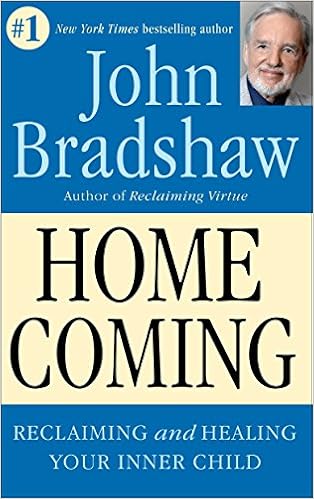
Homecoming: Reclaiming and Championing Your Inner Child, by John Bradshaw

Ebook Free Homecoming: Reclaiming and Championing Your Inner Child, by John Bradshaw
Have you listed just what should you obtain today? Is there any kind of strategy and also suggestion to get the brand-new collection of book? Well, if you have not that type of strategy, we will influence you and also see to it you to take it in noted. Publication is much advised to be constantly in checklist for you. It is sort of daily necessity. So, when you reserve much money for other needs, you also have to reserve some money to get guide.
The Homecoming: Reclaiming And Championing Your Inner Child, By John Bradshaw is guide that we currently advise. This is not type of big publication. However, this publication will help you to reach the big idea. When you concern read this book, you can obtain the soft file of it as well as save it in some various gadgets. Naturally, it will depend on just what tool that you own and do. For this instance, guide is advised to save in laptop computer, computer system, or in the gadget.
Recognizing the way the best ways to get this book Homecoming: Reclaiming And Championing Your Inner Child, By John Bradshaw is additionally important. You have actually been in ideal website to begin getting this details. Get the Homecoming: Reclaiming And Championing Your Inner Child, By John Bradshaw link that we give right here as well as see the link. You could purchase the book Homecoming: Reclaiming And Championing Your Inner Child, By John Bradshaw or get it as soon as possible. You could swiftly download this Homecoming: Reclaiming And Championing Your Inner Child, By John Bradshaw after obtaining offer. So, when you need guide promptly, you could directly obtain it. It's so easy and so fats, isn't it? You should prefer to through this.
When presenting Homecoming: Reclaiming And Championing Your Inner Child, By John Bradshaw as one of the collections of many books below, we assume that it can be one of the very best publications detailed. It will certainly have many fans from all nations visitors. And also precisely, this is it. You could truly disclose that this publication is just what we assumed in the beginning. Well now, let's seek for the other publication title if you have got this book review. You may find it on the search column that we offer.
About the Author
John Bradshaw was educated for the Roman Catholic priesthood and took advanced degrees in psychology, philosophy, and theology before becoming a professional counselor. He is the author of such major bestsellers as Family Secrets, Healing the Shame That Binds You, Homecoming, and Creating Love. He lives in Houston, Texas, and gives lectures and workshops nationwide.
Read more
Excerpt. © Reprinted by permission. All rights reserved.
CHAPTER 1 HOW YOUR WOUNDED INNER CHILD CONTAMINATES YOUR LIFE The person … in the grip of an old distress says things that are not pertinent, does things that don’t work, fails to cope with the situation, and endures terrible feelings that have nothing to do with the present. —HARVEY JACKINS I couldn’t believe I could be so childish. I was 40 years old and I had raged and screamed until everyone—my wife, my stepchildren, and my son—was terrified. Then I got in my car and left them. There I was, sitting all alone in a motel in the middle of our vacation on Padre Island. I felt very alone and ashamed. When I tried to trace the events that led up to my leaving, I couldn’t figure out anything. I was confused. It was like waking up from a bad dream. More than anything, I wanted my family life to be warm, loving, and intimate. But this was the third year I had blown up on our vacation. I had gone away emotionally before—but I had never gone away physically. It was as if I’d gone into an altered state of consciousness. God, I hated myself! What was the matter with me? The incident on Padre Island occurred in 1976, the year after my father died. Since then I’ve learned the causes of my rage/withdrawal cycles. The major clue came to me on the Padre Island runaway. While I sat alone and ashamed in that crummy motel room, I began to have vivid memories of my childhood. I remembered one Christmas Eve when I was about 11 years old, lying in my darkened room with the covers pulled up over my head and refusing to speak to my father. He had come home late, mildly drunk. I wanted to punish him for ruining our Christmas. I could not verbally express anger, since I had been taught that to do so was one of the deadly sins, and especially deadly in regard to a parent. Over the years my anger festered in the mildew of my soul. Like a hungry dog in the basement, it became ravenous and turned into rage. Most of the time I guarded it vigilantly. I was a nice guy. I was the nicest daddy you’ve ever seen—until I couldn’t take it anymore. Then I became Ivan the Terrible. What I came to understand was that these vacation behaviors were spontaneous age regressions. When I was raging and punishing my family with withdrawal, I was regressing to my childhood, where I had swallowed my anger and expressed it the only way a child could—in punishing withdrawal. Now, as an adult, when I was finished with an emotional or physical withdrawal bout, I felt like the lonesome and shame-based little boy that I had been. What I now understand is that when a child’s development is arrested, when feelings are repressed, especially the feelings of anger and hurt, a person grows up to be an adult with an angry, hurt child inside of him. This child will spontaneously contaminate the person’s adult behavior. At first, it may seem preposterous that a little child can continue to live in an adult body. But that is exactly what I’m suggesting. I believe that this neglected, wounded inner child of the past is the major source of human misery. Until we reclaim and champion that child, he will continue to act out and contaminate our adult lives. I like mnemonic formulas, so I’ll describe some of the ways the wounded inner child contaminates our lives using the word contaminate. Each letter stands for a significant way in which the inner child sabotages adult life. (At the end of this chapter you’ll find a questionnaire to help you ascertain how badly your own inner child was wounded.) Co-Dependence Offender Behaviors Narcissistic Disorders Trust Issues Acting Out/Acting In Behaviors Magical Beliefs Intimacy Dysfunctions Nondisciplined Behaviors Addictive/Compulsive Behaviors Thought Distortions Emptiness (Apathy, Depression) CO-DEPENDENCE I define co-dependence as a dis-ease characterized by a loss of identity. To be co-dependent is to be out of touch with one’s feelings, needs, and desires. Consider the following examples: Pervilia listens to her boyfriend talk about his distress at work. She cannot sleep that night because she is fretting about his problem. She feels his feeling rather than her own. When Maxmillian’s girlfriend ends their six-month relationship, he feels suicidal. He believes that his worth depends on her loving him. Maxmillian truly has no self-worth, which is engendered from within; he has others-worth, which depends on other people. Jolisha is asked by her jock husband if she wants to go out for the evening. She is wishy-washy and finally says yes. He asks where she wants to go. She says it doesn’t matter. He takes her to the Viking Barbecue Stand and to see the movie The Return of the Ax Murderer. She hates the whole evening. She pouts and withdraws from him for a week. When he asks, “What’s the matter?” she answers, “Nothing.” Jolisha is a “sweetheart.” Everyone comments on how nice she is. Actually, she only pretends to be nice. She is continually in an act. For Jolisha, being nice is a false self. She’s unaware of what she really needs or wants. She is unaware of her own identity. Jacobi is 52 years old. He comes to counseling because he has been in an affair with his 26-year-old secretary for two months. Jacobi tells me he doesn’t know how this happened! Jacobi is an elder in his church and a revered member of the Committee to Preserve Morality. He led the fight to clean up pornography in his city. Actually, Jacobi is in a religious “act.” He is completely out of touch with his sexual drive. After years of active repression, his sex drive has taken over. Biscayne takes his wife’s weight problem personally. He has greatly curtailed their social life because he is embarrassed to have his friends see his wife. Biscayne has no sense of where he ends and his wife begins. He believes his manhood will be judged by how his wife looks. His partner, Bigello, has a mistress. He periodically weighs her to be sure she is maintaining her weight. Bigello is another example of a person who has no sense of self. He believes his manhood depends on his mistress’s weight. Ophelia Oliphant demands that her husband buy a Mercedes. She also insists on keeping their membership in the River Valley Country Club. The Oliphants are heavily in debt; they live from payday to payday. They spend enormous amounts of energy juggling creditors and fashioning an image of upper-class wealth. Ophelia believes that her self-esteem depends on maintaining the proper image. She has no inner sense of self. In all the above examples we find people who are dependent on something outside of themselves in order to have an identity. These are examples of the dis-ease of co-dependence. Co-dependence is fostered in unhealthy family systems. For example, everyone in an alcoholic family becomes co-dependent on the alcoholic’s drinking. Because the drinking is so life-threatening to each family member, they adapt by becoming chronically alert (hypervigilant). Adaptation to stress was intended by nature to be a temporary state. It was never intended to be chronic. Over time, a person living with the chronic distress of alcoholic behavior loses touch with his own internal cues—his own feelings, needs, and desires. Children need security and healthy modeling of emotions in order to understand their own inner signals. They also need help in separating their thoughts from their feelings. When the family environment is filled with violence (chemical, emotional, physical, or sexual), the child must focus solely on the outside. Over time he loses the ability to generate self-esteem from within. Without a healthy inner life, one is exiled to trying to find fulfillment on the outside. This is co-dependence, and it is a symptom of a wounded inner child. Co-dependent behavior indicates that the person’s childhood needs were unmet, and therefore he cannot know who he is.
Read more
Product details
Paperback: 304 pages
Publisher: Bantam; Reprint edition (February 1, 1992)
Language: English
ISBN-10: 0553353896
ISBN-13: 978-0553353891
Product Dimensions:
6 x 0.8 x 9 inches
Shipping Weight: 13.6 ounces (View shipping rates and policies)
Average Customer Review:
4.6 out of 5 stars
248 customer reviews
Amazon Best Sellers Rank:
#10,598 in Books (See Top 100 in Books)
Based on other reviews, I was worried about this book being ridiculous. This was recommended to me by my therapist and we're going over the exercises in my therapy sessions. It is a little different, but I do better with unconventional methods. Not that this book is REALLY unconventional; it just uses a different approach. Going through each developmental stage helped me to locate where the disconnect happened and how I can fix it.
I have shared this book with people that I love deeply because I want them to experience the same joy and fulfillment that I have since reading Homecoming and and participating in the activities outlined in this Homecoming. I'm so thankful for John Bradshaw sharing his personal experiences with the world. This book has set me free to be me, finally. Thank God!
The first half of the book is terrific and very eye-opening, and mind opening. The second half of the book is good if you want to actually follow along and practice all of the procedures. This part was a little overwhelming for me. But overall, the book reveals just how messed up millions of people are because they didn't have a good "we" before trying to create an "I".
This is the second time around for me reading this book which initially saved my life. The inner child work is key to successful recovery for me. It helped me change the destructive patterns of behavior that challenged my quest for happiness. I re-wrote my inner script and stopped substituting actors!! Thanks John Bradshaw!
Are you really interested in helping yourself to become the REAL you? Are you committed to doing the work? Are you ready to face your "wounded" inner and leave the comfort of your false self? If you answer "yes" to any of these questions, get your notebook and pen ready to do your life work.John Bradshaw's "Home Coming" takes you through the steps necessary to growing the inner you to match the person that you were born to be. This book includes exercises that may seem difficult at first, even scary at times. However, they do get easier during this walk towards the REAL you.Just know that the journey to discovering your authentic self was not meant to be easy. However, finding your wonder child is well worth unlocking old wounds. John Bradshaw's "Home Coming" will assist you in your transition from arrested development to being the genuine adult that you were born to be.
This is my first review ever. To those commenting negatively about the book - all I can say is that you must not have been raised in a dysfunctional family, thus, not understand the deep wounding that this might have left on one's soul. I like the book and I like the exercises. Yes, he makes you revisit parts of your life you may not want to revisit and work through feelings that are scary and leave you incapacitated. I believe the truth in the statement "The only way to is through". I am seeing slow but progressive change in myself as a result of this book. I highly recommend to anyone who's had a rough childhood.
Even though it's written in the '70's and a few words are not used any more like "squelched" and "strokes", it is, in my opinion, extremely and deeply connective to awaken loving compassion in oneself for one's own past selves with trauma. I'm using it for that and it is helping me to keep aware of the healing process while doing other things most days. It describes something called "making an anchor" to connect a positive experience or how you would like an old trauma experience to be re-written or remembered. Nowadays we have EMDR which may do the same thing and perhaps quicker. One thing bothered me: not being ready to read his description of a sexual abuse scenario which came at the bottom of a page I was reading. But once I knew where it was, I could skip it. All the rest is an invaluable treasure trove for learning about the developmental stage tasks we all have to learn as we go on and what to do if we missed any, including healing ways that empower us now.
Brilliant, practical, timeless. Bradshaw covers the stages of early childhood development in a unique way, so that one can easily identify one's own interrupted development at different stages. Bradshaw then offers a simple way to come home to oneself, by embracing, protecting and nurturing the Wonder child within.
Homecoming: Reclaiming and Championing Your Inner Child, by John Bradshaw PDF
Homecoming: Reclaiming and Championing Your Inner Child, by John Bradshaw EPub
Homecoming: Reclaiming and Championing Your Inner Child, by John Bradshaw Doc
Homecoming: Reclaiming and Championing Your Inner Child, by John Bradshaw iBooks
Homecoming: Reclaiming and Championing Your Inner Child, by John Bradshaw rtf
Homecoming: Reclaiming and Championing Your Inner Child, by John Bradshaw Mobipocket
Homecoming: Reclaiming and Championing Your Inner Child, by John Bradshaw Kindle

Tidak ada komentar:
Posting Komentar